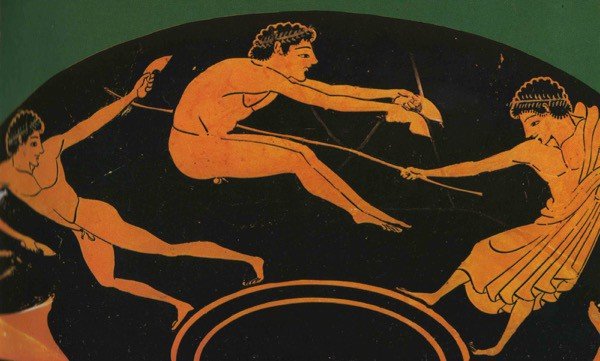
The ancient Olympic Games were primarily considered part of a religious festival which took place in honor of the father of the Greek gods and goddesses, Zeus. The celebration and the games were held in Olympia, a rural sanctuary in the western Peloponnese. The sanctuary’s name came from Mount Olympus which was the highest mountain on the Greek mainland, and was believed to be the home of the Greek gods and goddesses. The ancient Olympic Games began when, in 776 BC, Koroibos, a cook from the nearby city of Elis, won the stadion which was a 600-foot-long race. Apparently beginning with just a single foot race, the program grew to include 23 contests; an Olympiad never features more than 20. Participation in most events was limited to male athletes, but the equestrian events did allow women to take part by entering their own horses in these competitions. Running, boxing, pankration, horse racing, wrestling, chariot racing, two stade races, a long jump, discus throw, and the javelin throw were some of the main events.
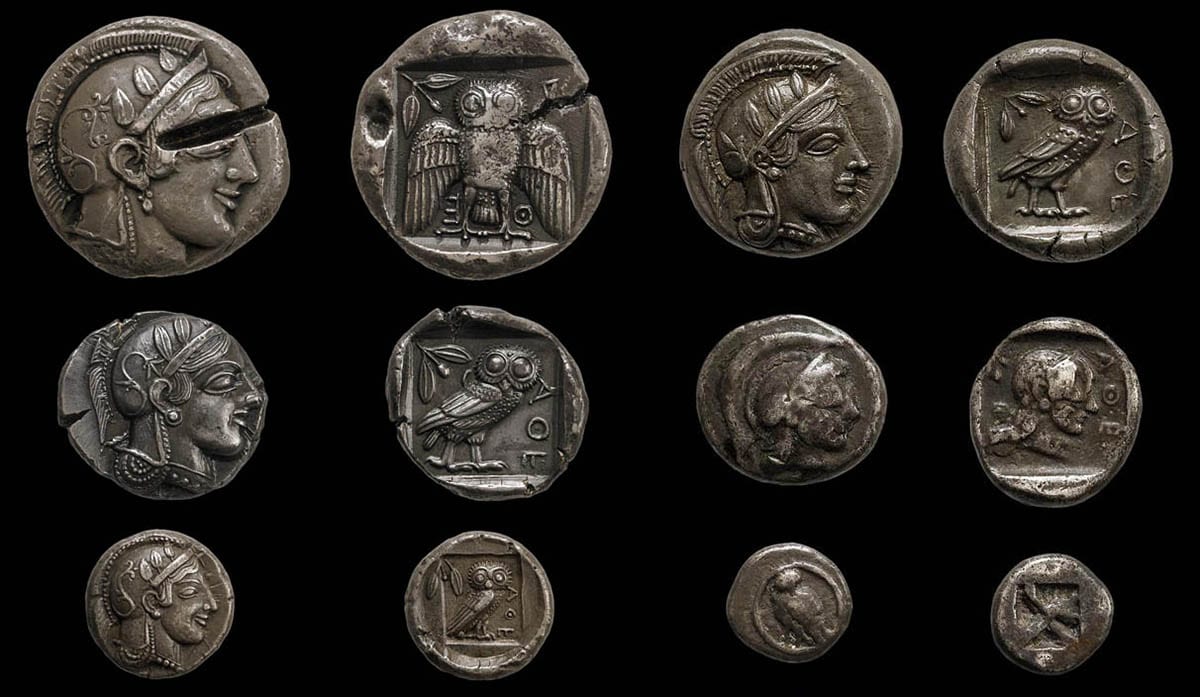
The first known coins were introduced in either Ionia in Asia Minor or Lydia some time before 600 BC, because the Greeks wanted a system of authenticated payment. These coins were made of an alloy of gold and silver known as electrum. With technological advances by the middle of the sixth century BC, the production of pure gold and silver coins became simpler. King Croesus introduced a double metal standard that allowed currencies of pure gold and pure silver to be traded in the marketplace. Most cities had their own coins which were used in inter-trade processes, and each city had its own symbols and signs carved on the coins. One such coin was the silver stater or didrachm of Aegina. Athenian coins were based on the monetary standard, the Attic standard, which had a drachm equaling 4.3 grams of silver. As time passed, Athens’ plentiful supply of silver increased its dominance in trade and it was made the pre-eminent standard. These coins were also known as “owls” owing to their central design feature
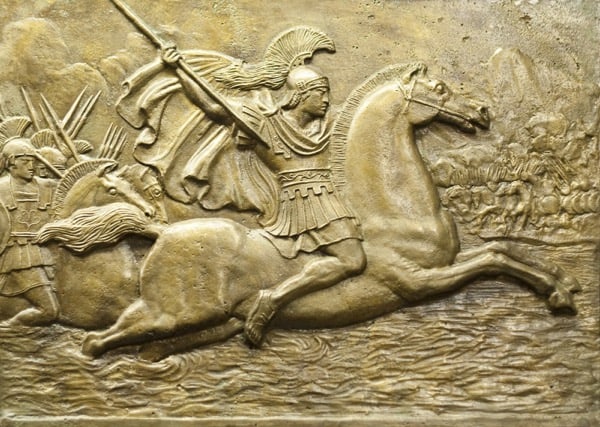
Alexander III of Macedon, widely known as Alexander the Great, was the son of King Philip II of Macedon. He became king after his father’s death in 336 BC. He conquered almost the whole of the known world during his kingship. Known as “the great” both for his military prowess and his diplomatic qualities, he conquered not only the lands but also the hearts of the people. As a king, he spread Greek culture, thought, religion, and language from Greece throughout Egypt, Asia Minor, Mesopotamia, and India. This widespread Greek culture initiated the Hellenistic era. During his rule, he was able to fulfill his father’s Panhellenic project which aimed at the Greek conquest of Persia. He was just 32 when he died of malaria in 323 BC. He is one of the greatest names in history and impossible to forget.
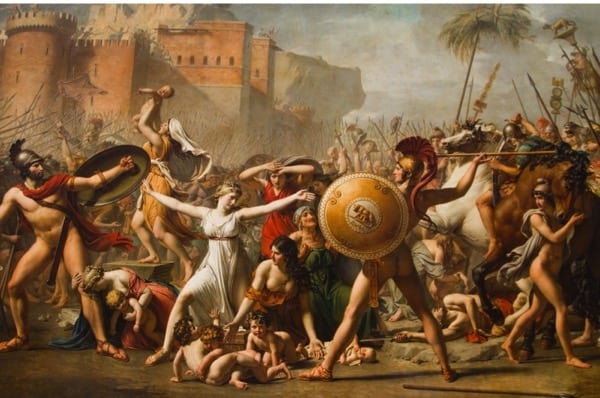
The Greek peninsula came under the control of the Romans after the Battle of Corinth in 146 BC. Macedonia then became a Roman province. Where some Greeks managed to maintain partial independence, many others surrendered. As King Attalus III left all his territories to the Romans in his will, the Kingdom of Pergamon fell into Roman hands during 133 BC, and it was decided that Pergamon was to be divided among Rome, Pontus, and Cappadocia. Following the lead of other Greek cities, Athens held a revolt in 88 BC, but the Roman general Sulla succeeded in crushing all their aspirations to become independent. The Roman civil wars continued to devastate the land until 27 BC when Augustus made the peninsula the province of Achaea. Following this, the Romans began to invest heavily in the rebuilding of the destroyed cities. Corinth was made the new province’s capital, and Athens flourished as a center of philosophy and learning.